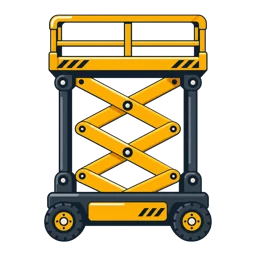
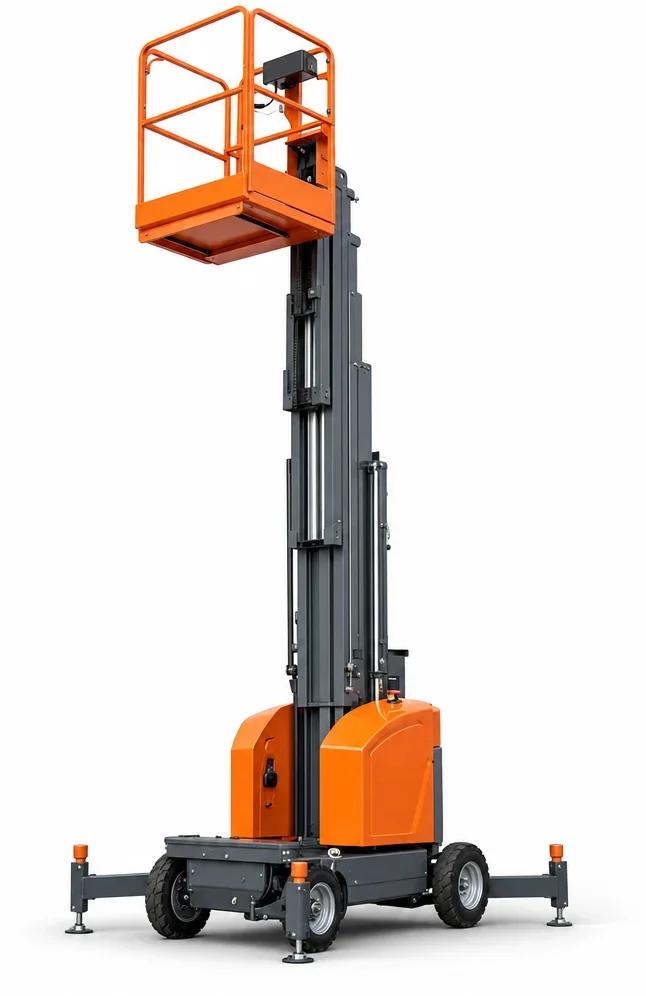
Where vertical masts make sense
- Tight aisles and narrow doors: Single-man-width chassis fits older facilities and service corridors.
- Slab-only tasks: Non-marking tires and low ground pressure protect finished floors in labs, logistics, and interior maintenance.
- Low overhead obstructions: Compact stowed height slips under piping, then elevates straight up to lights, sensors, or conduit runs.
Local influences on selection
- Mixed-age buildings: Retrofits may have offset thresholds, sloped ramps, or uneven joints between expansions. Check transitions and turning pockets around corners.
- Weather carryover: Moisture tracked from outside can make interior slabs slick near entries; tire choice and floor condition matter for traction.
- Service access patterns: Deliveries often route through constrained loading areas near bridges and tight alleys, favoring compact units that move easily from dock to work zone.
Sizing and platform considerations
- Platform height versus footprint: Higher models add weight and wheelbase; verify elevator or liftgate limits if moving between floors.
- Outreach features: Some masts offer slight outreach; if true up-and-over is required, consider /articulating-boom-lift-rental/.
- Productivity alternatives: For straight-up work with more deck space, compare /electric-scissor-lift-rental/.
Actual site conditions, the selected unit’s instructions, and facility procedures govern what is permissible at height.
Keep the comparison specific
A useful equipment discussion starts with the work height, the practical machine position, the route into the area, the floor or ground along that route, and the people, tools, or material involved. Those details clarify whether vertical access, outreach, or material placement is the real constraint.