Start with the load and duty cycle
Power planning in Pittsburgh often mixes continuous tools with intermittent HVAC or lighting loads. Identify: - Starting vs running watts for motors and pumps - Voltage/phase needed for site trailers or temporary panels - Hours between refueling when access is limited by slopes, fencing lanes, or after-dark work windows Long cable runs to reach elevated areas can introduce drop; that may push you to a higher-capacity generator stationed on stable ground.
Surface, slope, and placement
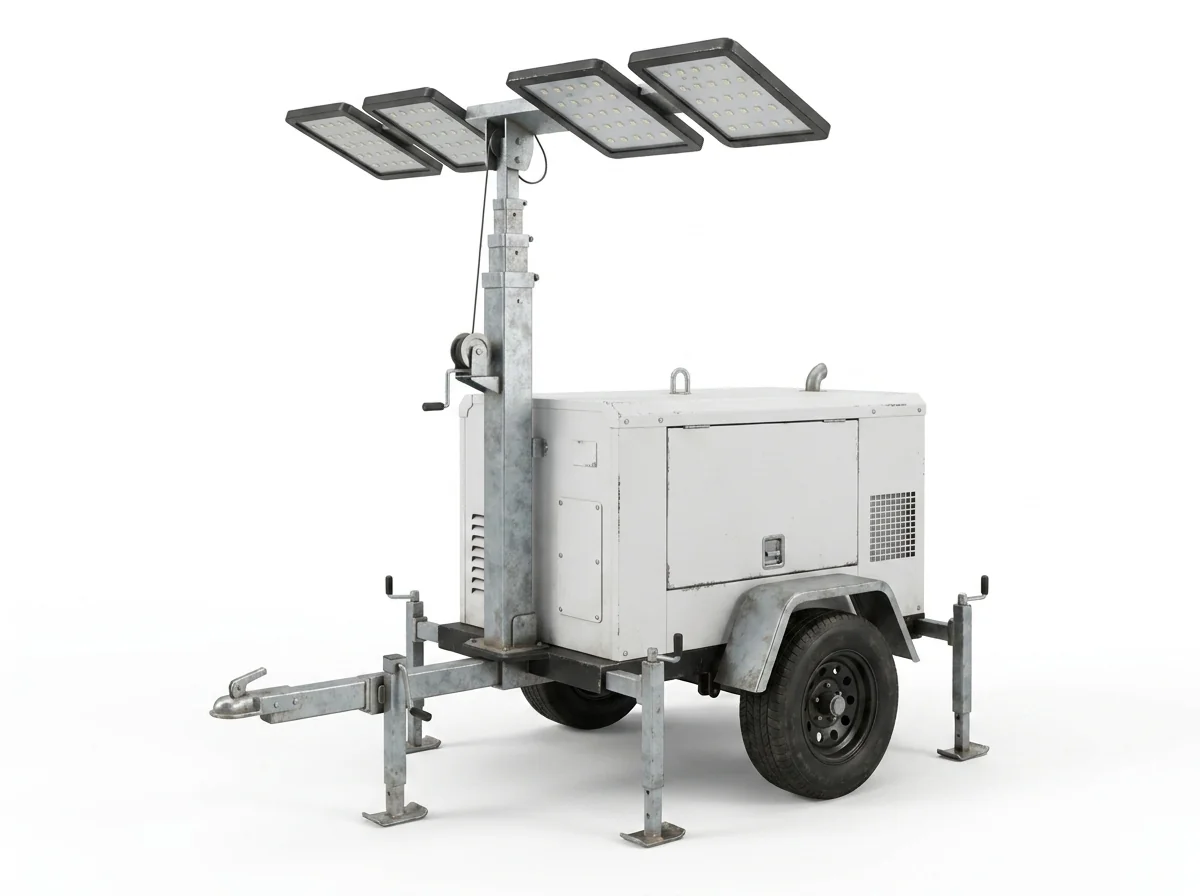
Hilly streets and lot transitions around older industrial sites mean the unit’s parking spot matters. A generator or light cart that sits below grade on firm slab behaves differently than one perched along a crowned gravel lane. Wet surfaces after frequent precipitation can rut; rough-terrain wheel sets and leveling jacks become relevant for stable placement. Where work occurs inside large production buildings, non-marking tires on towable lights reduce floor impact.
Lighting coverage for varied sites
High-bay interiors in modern tech facilities need targeted, glare-controlled light. Outdoors, bridge and road work wants wider throw, with spacing that still leaves access for lifts and telehandlers. Note mast height relative to nearby structures so the light can clear railings and temporary parapets without shadowing.
Access routes and transport limits
Bridge weight and clearance restrictions around Pittsburgh can affect how a generator or tower gets to the pad. Plan delivery routes that avoid tight overpasses and steep curb cuts, especially when towing behind smaller trucks. If the power source must ride an incline, check gradeability and stabilizing requirements for the unit and towing equipment.
Coordinating with aerial work
When lifts are involved, confirm: - Cable paths that don’t cross lift travel lanes - Light placement that avoids washout for operators at height - Refueling spots that don’t block boom swing or scissor approach For indoor slab work alongside scissor lifts, see /electric-scissor-lift-rental/. For uneven exteriors, compare /rough-terrain-scissor-lift-rental/ and /boom-lift-rental/.
Weather and runtime
The regional climate brings damp mornings and variable winds on open job pads. Enclosures, muffling, and planned shutdown windows may be needed where noise and moisture sensitivity exist. Runtime estimates should consider cold starts and longer idles during staging or traffic holds.