Why the local environment changes the shortlist
The city’s grades and bridge network often dictate delivery paths and staging spots. Outdoor work areas can be slick or rutted after rain, while indoor slab jobs in large distribution or robotics buildings call for compact machines with non-marking tires. These factors push the decision toward either rough-terrain scissor platforms or electric slab lifts with tight turning radiuses.
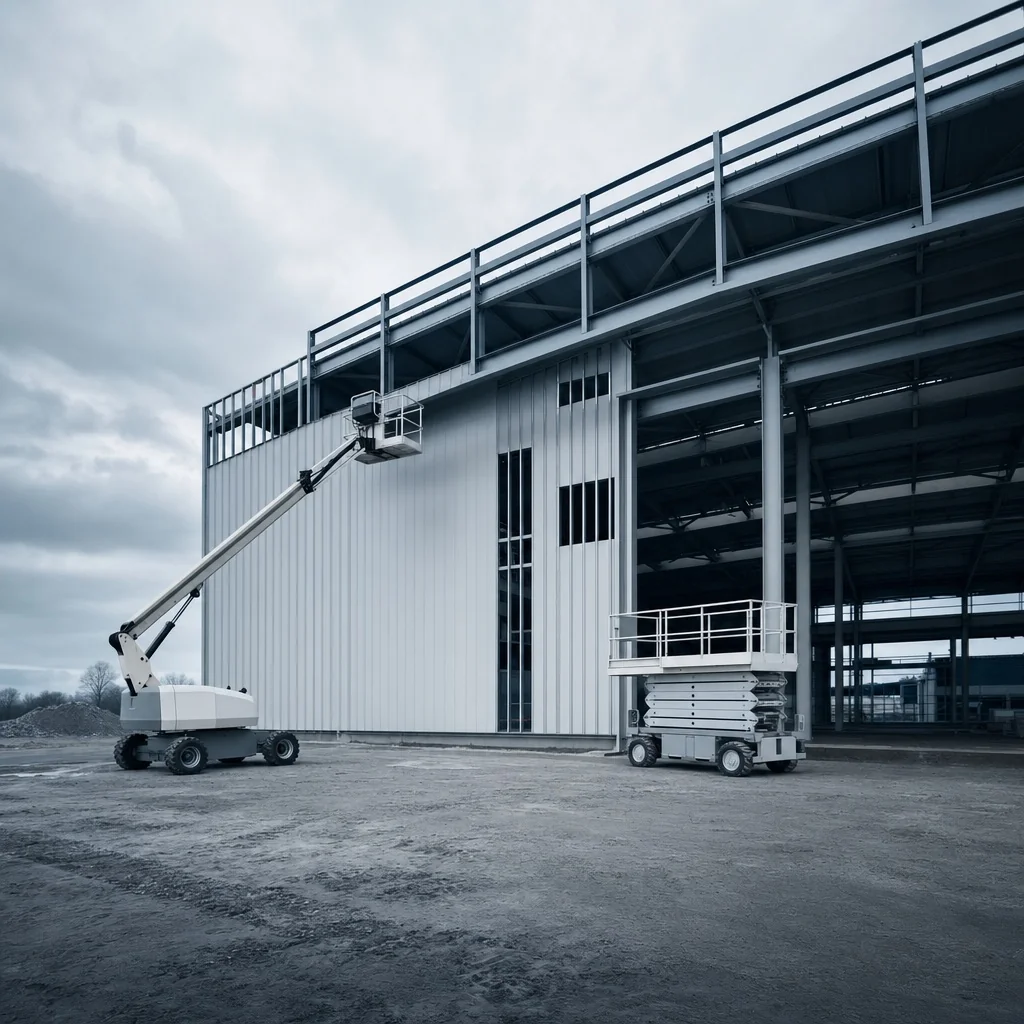
Key considerations we emphasize: - Approach and setup: Can the machine sit below the task or must it enter under a low header? Articulating booms differ from slab scissors when obstacles sit between the machine and the work plane. - Surface and slope: Many sites are not flat. Gradeability and stabilization features matter before platform height. - Power source and emissions: Indoor facilities and finished slabs favor electric units; exterior steel work may lean towards diesel or hybrid RT models.
How the guide is organized
Each product page explains the decision path for that category, then links to related options when the first choice doesn’t fit. For example: - Scissor platform work on finished floors: start at /electric-scissor-lift-rental/. - Uneven lots or outdoor steel: see /rough-terrain-scissor-lift-rental/. - Overhead access with obstacles: compare /articulating-boom-lift-rental/ and /telescopic-boom-lift-rental/. - Material placement at height: review /telehandler-rental/.
What to bring to a conversation with a supplier
Arriving with site grades, floor ratings, travel path widths, and the working height narrows models quickly. Noting doorway widths, threshold heights, and any bridge or alley constraints near the site helps route the right size machine.
For general questions, start with /products/ or get in touch at /contact/.