Core decisions: load, reach, ground
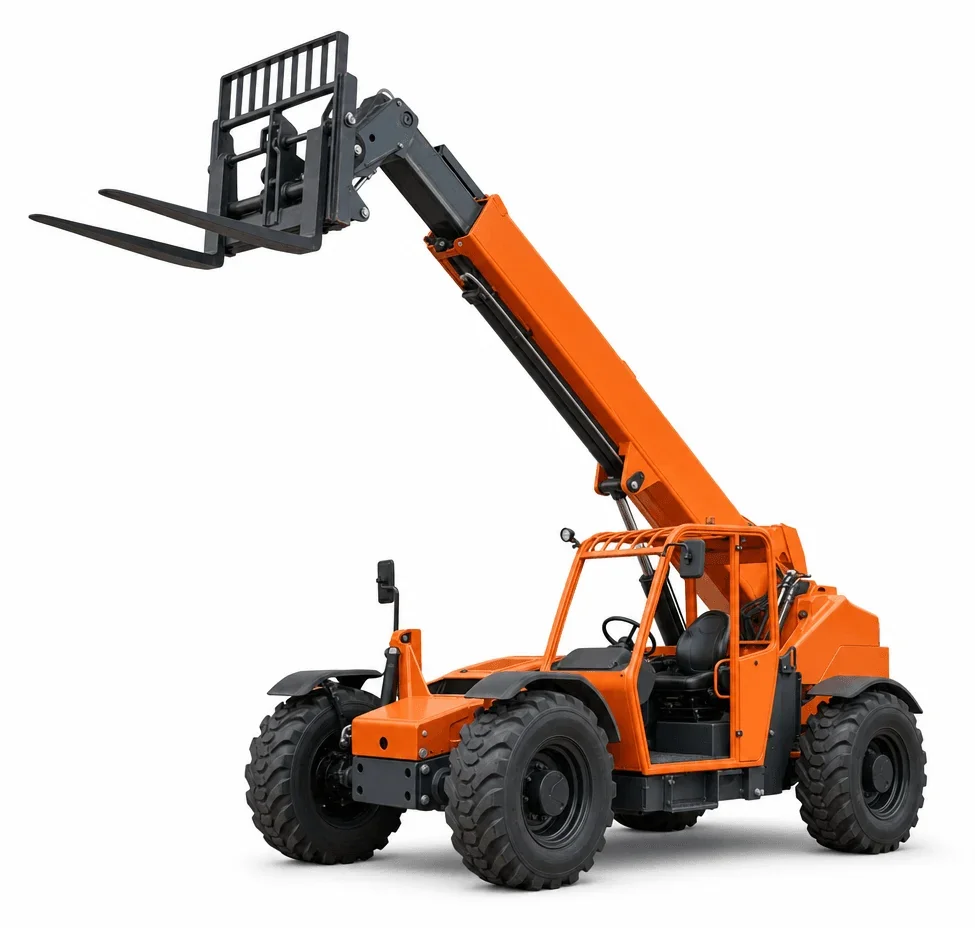
Telehandler selection rests on three linked factors: - Load envelope: Actual weight plus load center. Tall stacks or long materials reduce rated capacity at reach. - Placement geometry: Height to the landing and horizontal offset from the forks to the drop point. Pittsburgh’s tiered sites frequently require placing from a lower elevation. - Ground and approach: Sloped alleys, compacted fill, and wet soil after rain affect stability and traction.
Local site influences
- Hilly topography: Approaches with changing grade may limit how close the chassis can get. Longer boom class or a rotating unit may be needed to land loads without repositioning on unstable edges.
- Regional climate: Frequent precipitation leaves slick or rutted pads. Rough-terrain tires and ground clearance are common priorities for exterior work around industrial sites and distribution buildings.
- Routing to site: Bridge-adjacent access and constrained turns can favor mid-size machines that still meet reach needs while fitting delivery paths.
Attachments and configuration considerations
While specific operating guidance belongs to the model manual and site procedures, planning should account for: - Fork length matched to pallet depth and landing setback - Carriage type where lateral adjustment is needed - Boom angle limits near overhead obstructions in high-bay interiors
Adjacent categories
- For personnel access at elevation, see /boom-lift-rental/ with options at /articulating-boom-lift-rental/ and /telescopic-boom-lift-rental/.
- For interior pallet work on smooth slab, compare /forklift-rental/.
Actual site conditions, the selected unit’s instructions, and job procedures govern what is permissible during lifting and placement.