Start with work geometry
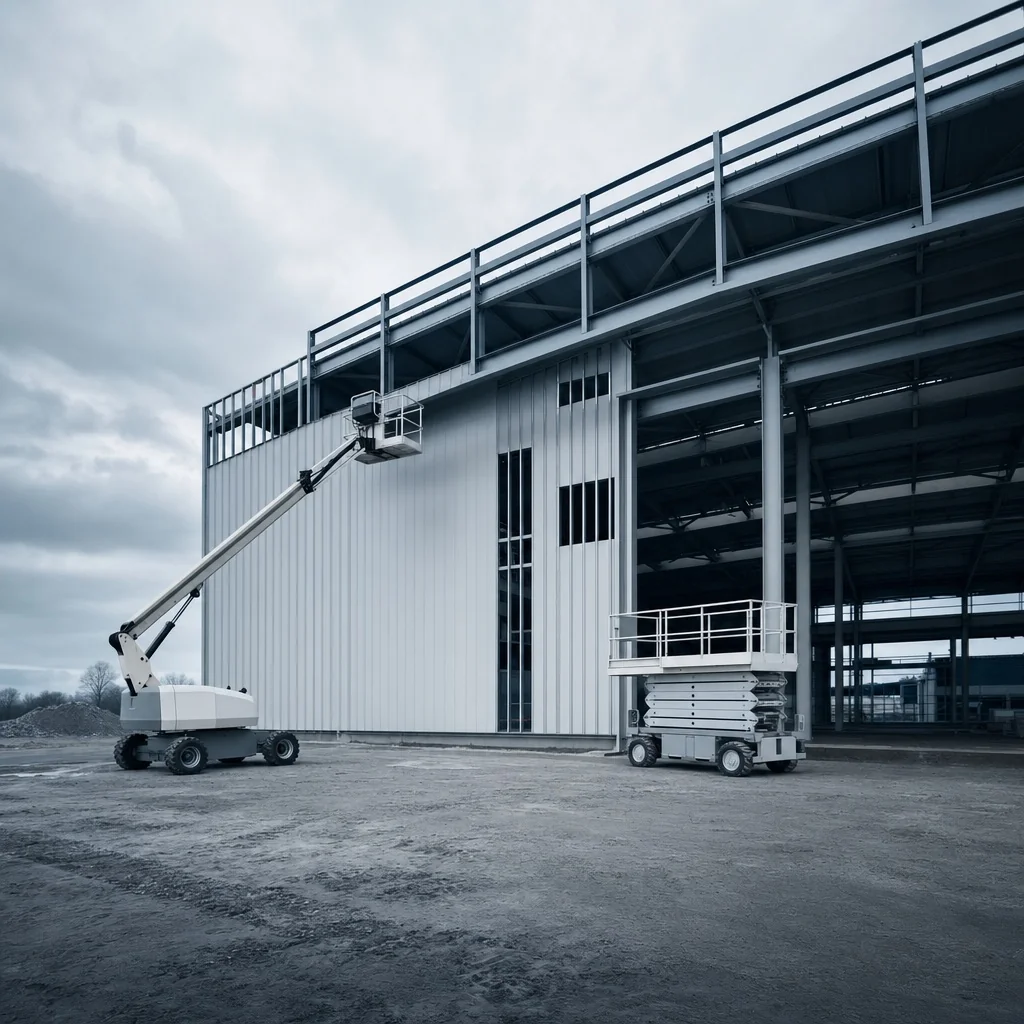
- Directly below the task: a scissor lift’s vertical travel and platform size usually provide faster up‑and‑down cycles for ceiling, signage, and conduit runs.
- Offset from the task: a boom lift’s horizontal reach clears obstructions like conveyors, façade setbacks, or equipment lines.
Measure three constraints: 1) Working height and any ceiling obstructions. 2) Platform capacity for people and materials. 3) Floor or grade condition from delivery point to work zone.
How Pittsburgh conditions change the choice
- Sloped approaches and uneven alleys are common. Steeper grades and crowned streets push many outdoor jobs toward rough‑terrain scissor lifts with stabilizing features, or to boom lifts with higher ground clearance.
- The regional climate leaves surfaces wet or soft after weather swings. Traction, ground pressure, and non‑marking versus lugged tires matter from the first curb cut to the final setup.
- High-bay maintenance in modern industrial sites often needs clean, non‑marking electric units that fit through interior doors and onto finished slabs.
Narrowing scissor lift types
- Electric slab scissor: compact width for aisles and elevators, non‑marking tires, quiet operation for occupied buildings.
- Rough‑terrain scissor: wider stance, larger tires, and outdoor duty for unfinished sites, staging yards, and exterior envelope work.
If outreach or façade articulation becomes necessary, compare scissor options with booms on the aerial lift and boom lift pages.
Common Pittsburgh use cases
- Facility maintenance in distribution buildings: slab electrics for lighting, racking, and HVAC drops.
- Industrial retrofits: mixed fleets where a rough‑terrain scissor handles exterior access and an electric slab scissor finishes interiors.
- Bridge-adjacent jobsites: delivery routing and set-down zones may limit machine width and turning radius.
Actual site conditions, the selected unit’s instructions, and job procedures govern exterior or elevated work.